
When Resistance Is Really Responsibility
What looks like resistance is often responsibility. A story about leadership, trust, and why teams make progress when they stop arguing positions and start understanding what people are carrying.
The leaders I work with are already ahead. What they’re running into isn’t a lack of effort or capability – it’s a team that won’t fully gel, a dynamic they can’t shift, a sense that the results don’t match the effort. Sometimes it’s a hidden ceiling they can feel but can’t name. Sometimes it’s friction buried so deep in the system that no one inside can see it.
They’re not broken when they call me, they’re blocked. Being perceptive, they can feel when the person, the room, and the system aren’t moving together. My work is to help them see exactly what’s in the way, name it clearly, and move.
To move leaders, I Coach, I Speak, I Facilitate
"Any executive or team that engages Tim will see measurable results in a very short period of time."
— Vern M., Vice President
What stalls capable people, what’s slowing your team, and what to do before it hardens into culture. Leaders tell me they’re still using ideas from notes I sent years ago. That’s the goal.
Your information stays with me. Unsubscribe anytime.
Most leaders feel clearer in our first conversation. Not because I have all the answers, but because I ask the questions that reveal what has been hiding in plain sight: the habit, fear, role confusion, or system pattern that keeps repeating.
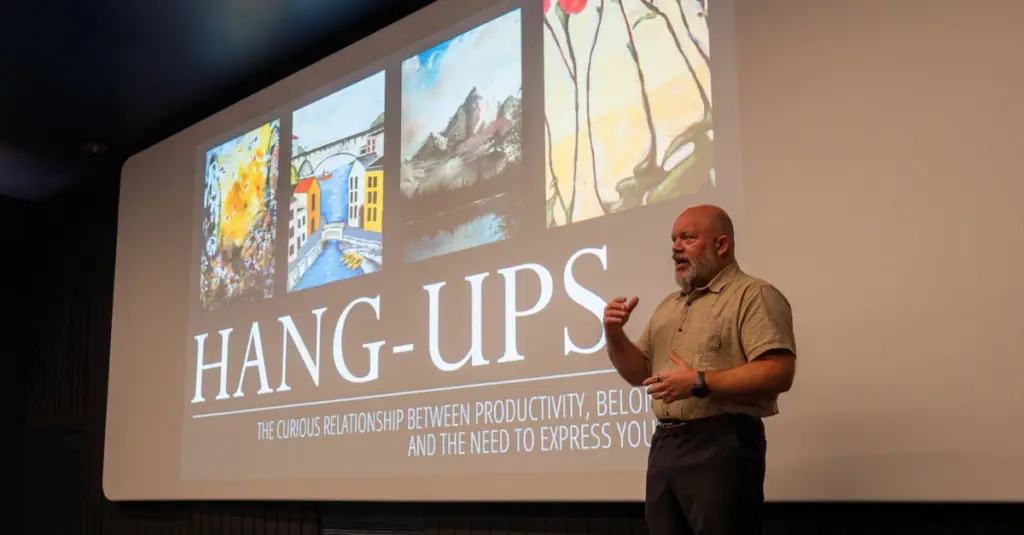
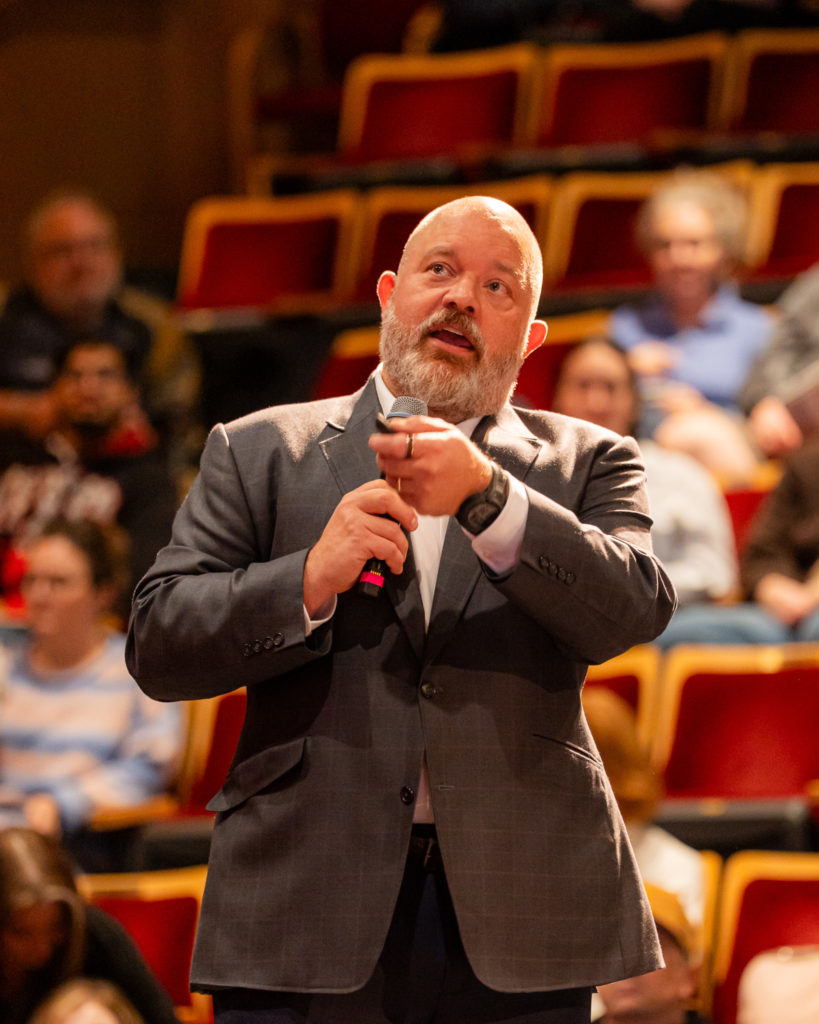
Your audience doesn't need another hour of good ideas. They need language for the tension they're already carrying: fear, change fatigue, decision drag, trust, focus, or the gap between what they know and what they do. My talks give them a frame they can use the same day.
You can have smart, talented people and still not move as one. Roles collide. Priorities compete. Decisions reopen. People get careful when candour is needed. I speak with the people who matter, surface what the group can't yet say, and help the room build real alignment.
I build talks for rooms that need more than energy. Founders, academic leaders, field teams, technical experts, and senior managers all face moments when old language stops working. I’ve delivered keynotes and workshops for industry associations, municipalities, universities, health authorities, and corporate clients across North America. Audiences leave with a clearer way to see the problem, and a practical next move.
I work one-on-one with senior leaders carrying decisions, teams, and pressure that have outgrown their old tools. Often the issue isn’t a skill gap; it’s an execution gap between the person, the role, and the system around them. We find it, name it, and make the next move clear. Clients tell me they’re still using what we built together years later. This isn’t a one-time intervention; it’s a permanent shift.
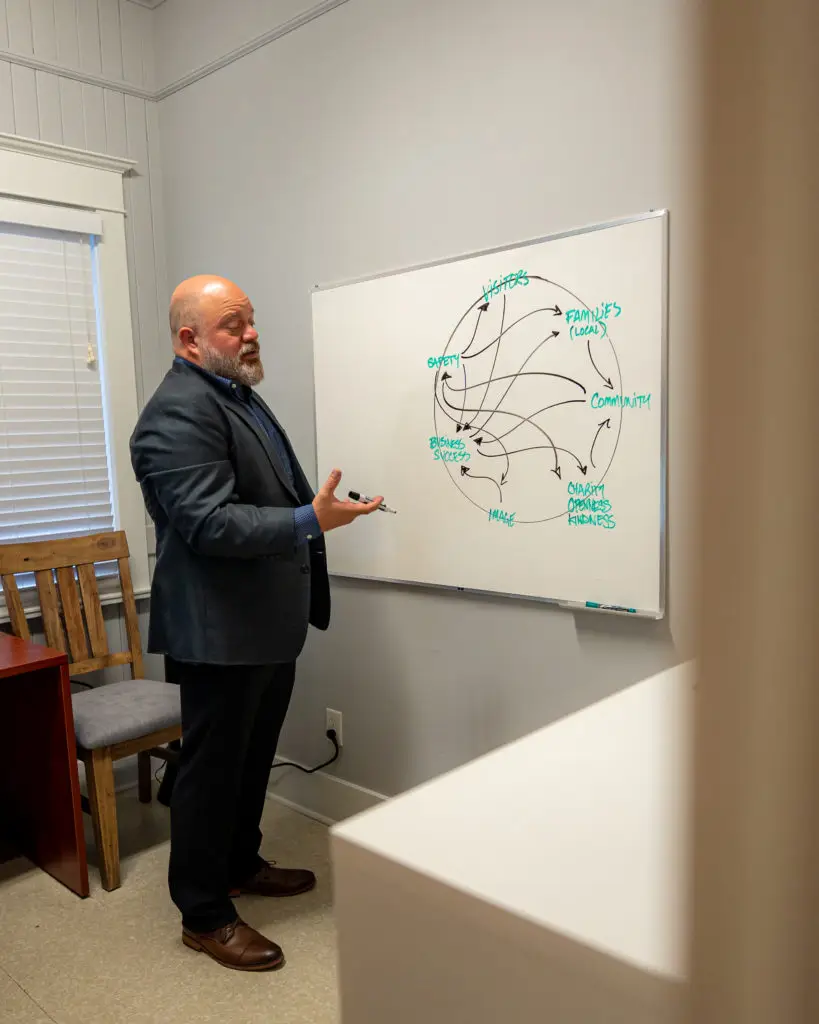
Smart individuals don’t automatically become aligned teams. The work gets stuck where roles meet, priorities compete, and decision rights blur. Before anyone gets in the room, I’ve already spoken with the people who matter and mapped what the group can’t yet say. By the time we convene, the room does the real work. People own what they build. That’s what makes it stick.
My published work includes peer-reviewed research in the Journal of Operations Management and the British Food Journal, and in McGraw-Hill Ryerson textbooks (required reading for business students). I was a national business columnist with June Warren Publishing from 2007 to 2009. I’m now finishing my first book.
Committed to helping bring out the best in leaders, I’ve designed proprietary tools to map team performance and trust, surface high-potential leaders, measure organizational risk in mergers and acquisitions, and diagnose employee fit and engagement.
Field notes on stuck teams, clear decisions, trust, roles, and the work beneath the work.

What looks like resistance is often responsibility. A story about leadership, trust, and why teams make progress when they stop arguing positions and start understanding what people are carrying.

Canadian higher education is not facing a simple correction. It is facing a collapse that exposed fragile funding models, weakened leadership alignment, and the urgent need for institutional robustness.

The risk with AI is not that it gets things wrong. It is that it makes it easy to stop thinking. Reflections on using AI for networking, validation, and brand development without outsourcing your judgment.

Business travel can either leave you depleted or sharpen you for the work ahead. Twenty simple rules for protecting your energy, maintaining perspective, and leading well while on the road.

The challenge is rarely the policy itself. It is the leadership response to uncertainty. Reflections on decision-making, judgment, and navigating change in Canadian higher education.

Lorem ipsum dolor sit amet, consectetur adipiscing elit, sed do eiusmod tempor